
You Bought It. You Own It. But That Logo Still Belongs to Someone Else.
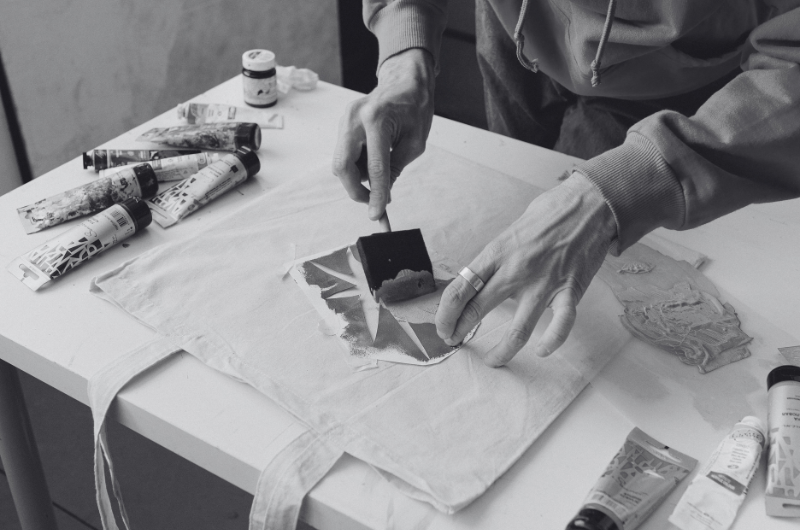
Upcycling designer goods is a creative, sustainable practice worth doing right. Here is what to know before you list that redesigned dust bag for sale.
You bought the bag. You own the bag. But the logo on the bag is still the brand’s name tag.
Every year, millions of pounds of clothing and accessories are donated in the U.S. with good intentions. Much of it never reaches a secondhand rack. Instead, it gets bundled, exported, and dumped in markets and landfills across West Africa, South America, and Southeast Asia. Ghana’s Kantamanto market alone receives roughtly 15 million garments per week, and an estimated 40% of that ends up as waste. Upcycling and repurposing are among the most direct ways to keep items out of that cycle: giving materials a second life before they become someone else’s problem.
But when the material you’re working with carries a designer logo, the legal landscape shifts. The question is not whether you paid for it. The question is whether people might think the brand made it, approved it, or partnered with you.
When Upcyling Gets Legally Complicated
Upcycling is generally safest when it’s for personal use, one-off, and not marketed as an official designer item. It gets riskier when you sell online, scale production, or make the designer logo the main reason someone buys it.
The law cares less about whether you owned the original and more about whether your upcycled product might make buyers think the brand made it, approved it, or guarantees its quality. Shoppers can’t guess your intentions. They look at your product titles, photos, tags, and description.
Consider two common scenarios. A seller turns a Louis Vuitton dust bag into a fanny pack and lists it with the LV name in the title. EVen without any intent to mislead, that listing can read as though Louis Vuitton produced the item. Or a creator turns vintage Chanel buttons into earrings. The buttons where meant for clothing, but once they become jewelry, the product can look like “Chanel earrings” to a quick-scrolling shopper.
The Legal Tripwires
Confusion: Trademark law focuses on whether consumers would think the brand is the source of, or is affiliated with, your product. Cognitive science shows people make snap judgments about brands in seconds. A useful gut check: would a stranger recognize your brand (not the designer’s) within three seconds of seeing the product? It not, may be a confusion problem.
Dilution. Well-known brands receive extra protection. Even without confusion, using their marks in a way that blurs or tarnishes their reputation can create liability.
Counterfeit risk. If it looks like you placed a brand’s logo on a new product they did not make, you’re in risky territory.
First Sale Is Not A Magic Shield
A common assumption: “I brought it, so I can do whatever I want with it.” In trademark law, the first sale doctrine generally allows resale of genuine goods. But upcycling can trigger the material alteration argument. Once you cut, sew, or assemble the item into something new, the brand can argue it is no longer the product consumer expect. Material alteration can defeat a first sale defense entirely.
Copyright adds another layer. First sale allows resale of a lawfully made copy, but it does not grant the right to create new derivative works from protected artwork. If the designer material includes original prints, patterns, graphics, or illustrations, copyright applies. And while some assume “I transformed it” equals faire use, transformation is only one factor in a highly fact-specific, multi-factor test. It is not a guarantee.
Post-Sale Confusion: The Repeat Offender
Even if your buyer understands the product is upcycled, the people who see it afterward (friends, strangers, Instagram followers) may assume it’s official. This concept, called post-sale confusion, is a frequent issue in luxury brand disputes. It can create liability even when the original purchaser was fully informed.
A Practical Risk Meter
Lower risk: One-off customer pieces for personal use. No designer name in the product title. Your own label is prominent; the logo is incidental, not the feature.
Medium risk: Small runs with online sales. Designer material or logo still visible. Disclaimers are in place, but marketing still leans on the designer name.
Higher risk: Product name includes the designer brand. Designer logos are added to products not originally made by that brand. The log is the main fature of the listing. Production is scaling or ads are running.
How to Lower Your Risk
Lead with your own brand. Your name goes first on tags, packaging, and product page headers.
Describe source materials honestly: “Upcycled from authentic vintage materials.”
Include a clear disclaimer: “Not affiliated with [Brand].”
Avoid product titles like “CHANEL EARRINGS” or “LV FANNY PACK.”
Do not make the designer logo the hero image or thumbnail.
Be careful with the word “authentic.” Describe the materials as authentic, not the finished product.
Avoid hashtags or SEO keywords that imply affiliation (“#chaneljewelry”).
Do not scale to volume before pressure-testing the risk.
Safer language you can use: “Handmade by [Your Brand]. Upcycled using authentic pre-owned components. Not affiliated with or endorsed by [Brand].”
Keep Your Receipts (Literally)
If you sell online, documentation matters. Save purchase and authentication records. Screenshot your listings as posted, including the title, photos, and disclaimers. Keep your disclaimer language consistent everywhere: your site, Etsy, invoices, social posts.
And if you receive a cease-and-desist letter, know that it is not automatic defeat. Some creators have successfully pushed back by showing their products were clearly upcycled, branded under their own name, and disclosed as unaffiliated. Those outcomes are less common than lawsuits, but they show that preparation matters.
Bottom Line
Upcycling is one of the most meaningful ways to keep quality materials in circulation and out of landfills overseas. It deserves to be done thoughtfully, both as a craft and as a business. The goal is simple: build a product identity that stands on your own name, not someone else’s brand.
If you are building a business around upcycled goods and want a review of your product pages, packaging, or sourcing claims before you scale, that is the kind of work I do.
This post is general education, not legal advice for your specific situation.